
Why So Many Desk Workers Are Swapping Weekly Appointments For This 3-in-1 Neck Device
“I put it on to unwind for fifteen minutes after a long Tuesday. I ended up dozing off — and woke up without that familiar knot at the base of my skull.”
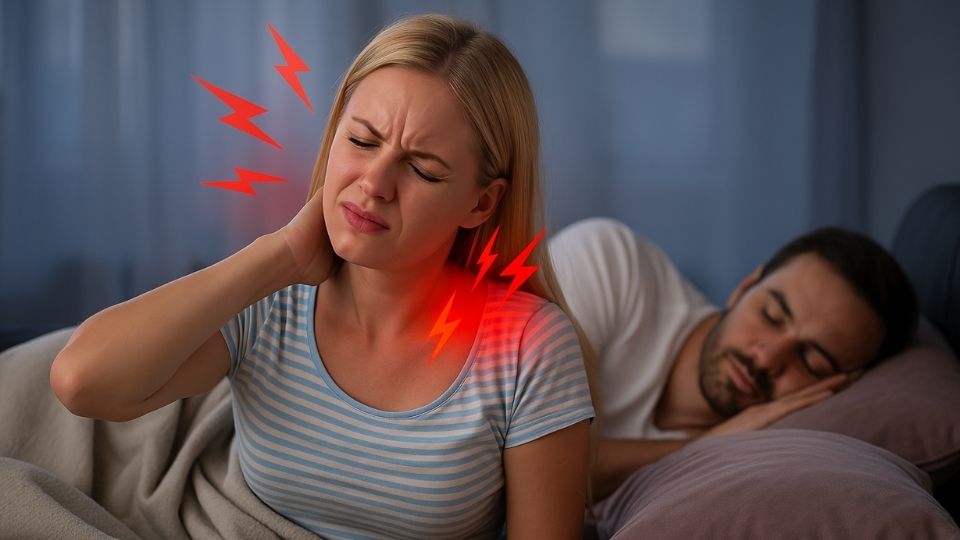
If you found your way to this page, there is a decent chance you already know the feeling: you sit up in the morning and something in your neck has decided not to come along.
It rarely arrives all at once. It starts as a bit of stiffness on one side. Then it becomes the thing you notice at 3pm, when you catch yourself with your chin pushed forward and your shoulders somewhere up near your ears. You roll your head. You stretch in the doorway. Maybe you take something for it so the afternoon can carry on.
By evening it has quietly come back. And the sleep you were counting on to reset everything simply hands the same neck back to you in the morning.
The question a lot of people eventually ask is whether there is a way to interrupt that loop at home — without a standing appointment, without a pill schedule, and without another gadget that ends up in a drawer.
That question is what led us to look at a device called FisioRest.
What Modern Life Is Actually Doing To Your Neck
Think of the cervical spine as a gentle forward-leaning curve rather than a straight column. That curve is what lets seven small vertebrae carry the weight of your head all day without complaint.
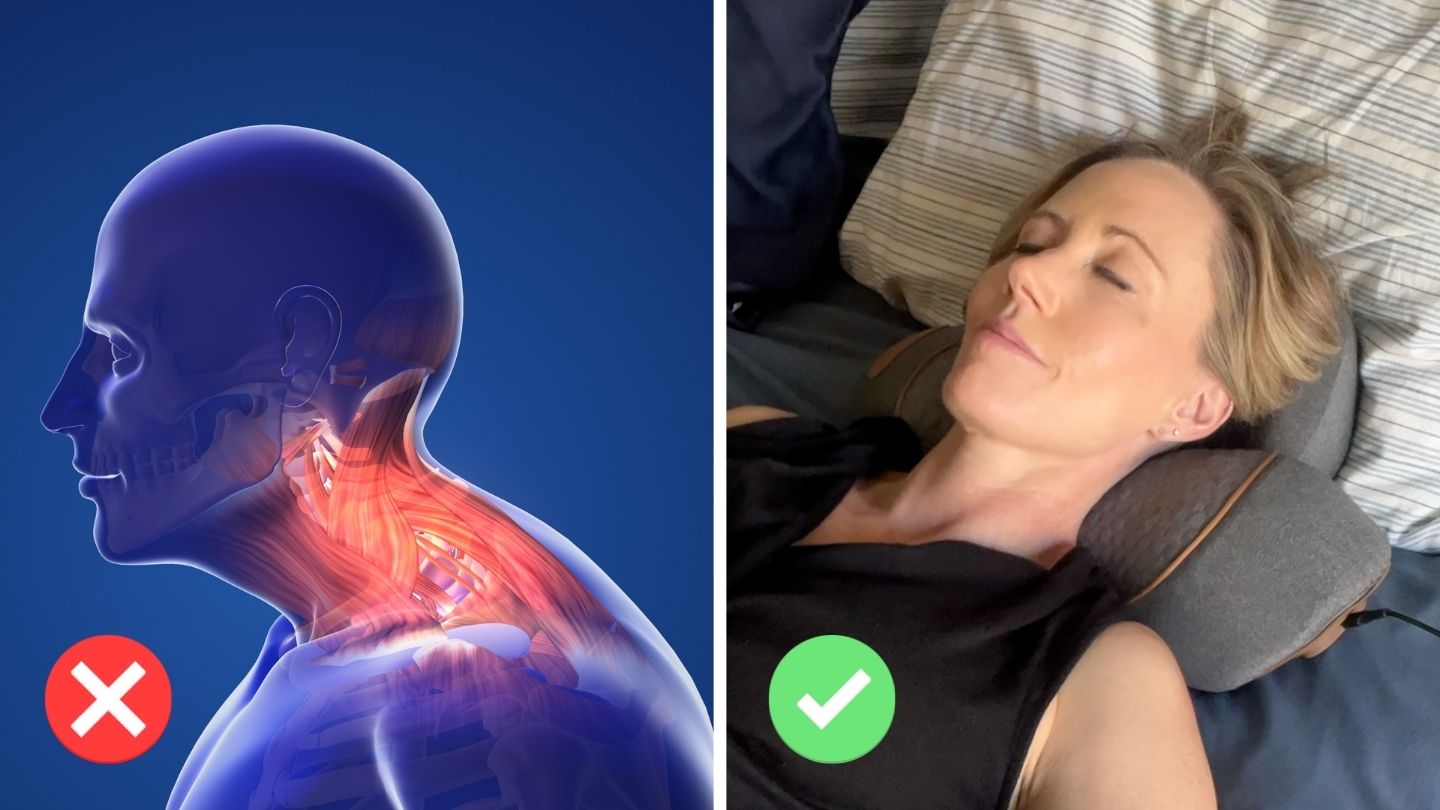
Now think about how much of the day that curve spends flattened out. Laptop screens sit below eye level. Phones sit lower still. Hours of that, repeated for years, gradually trains the head forward of the shoulders — the posture that physical therapists informally call “tech neck.”
Two things follow. The deep muscles along the back of the neck stop resting properly, because they are now holding a load they were never meant to hold statically. And the spacing between vertebrae narrows, which can leave less room for the nerve roots that thread out between them.
That combination is why neck trouble so often refuses to stay in the neck. It shows up as a band of pressure at the base of the skull, as tension headaches that build through the afternoon, as a shoulder that will not settle, sometimes as a dull tingle down an arm.
The part that makes it stubborn
Stretching helps the surface muscles. Heat helps circulation. Neither one creates space between compressed vertebrae. When only part of the picture gets addressed, relief tends to last exactly as long as the session does.
Why Reaching For Painkillers Keeps You In The Loop
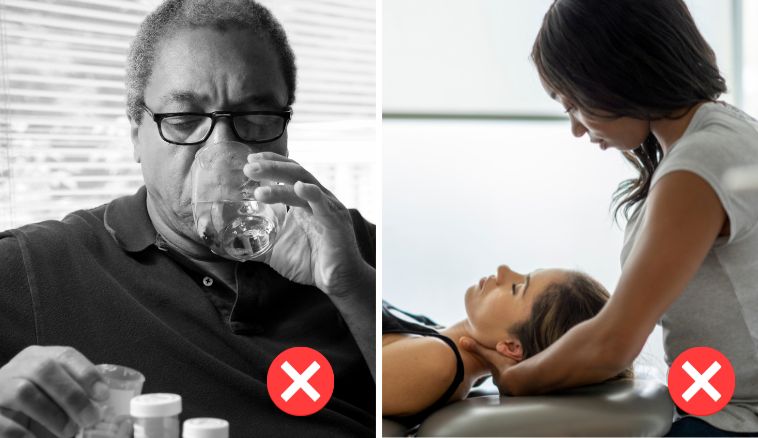
There is nothing wrong with taking something to get through a bad afternoon. The limitation is simply that it is working on the signal, not on the situation producing it.
Your neck is not sore because your bloodstream is short of ibuprofen. It is sore because of accumulated muscular tension and a curve that has been flattening for years. Until something addresses the tension and the compression themselves, the ache has every reason to return on schedule.
The traditional answer to that is a professional: a chiropractor, an osteopath, a physical therapist. Those work — genuinely. The catch is the maintenance. One session in the United States commonly runs somewhere between $80 and $150, and almost nobody is told to come once. When the appointments stop, the tension has a habit of drifting back.
What has been missing is something in between: a way to apply the same basic principles at home, on the days you actually need them.
Meet FisioRest: Three Therapies, One Fifteen-Minute Session
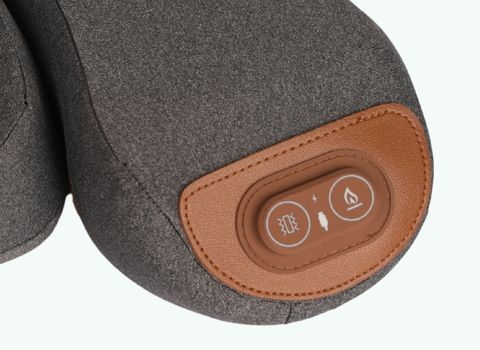
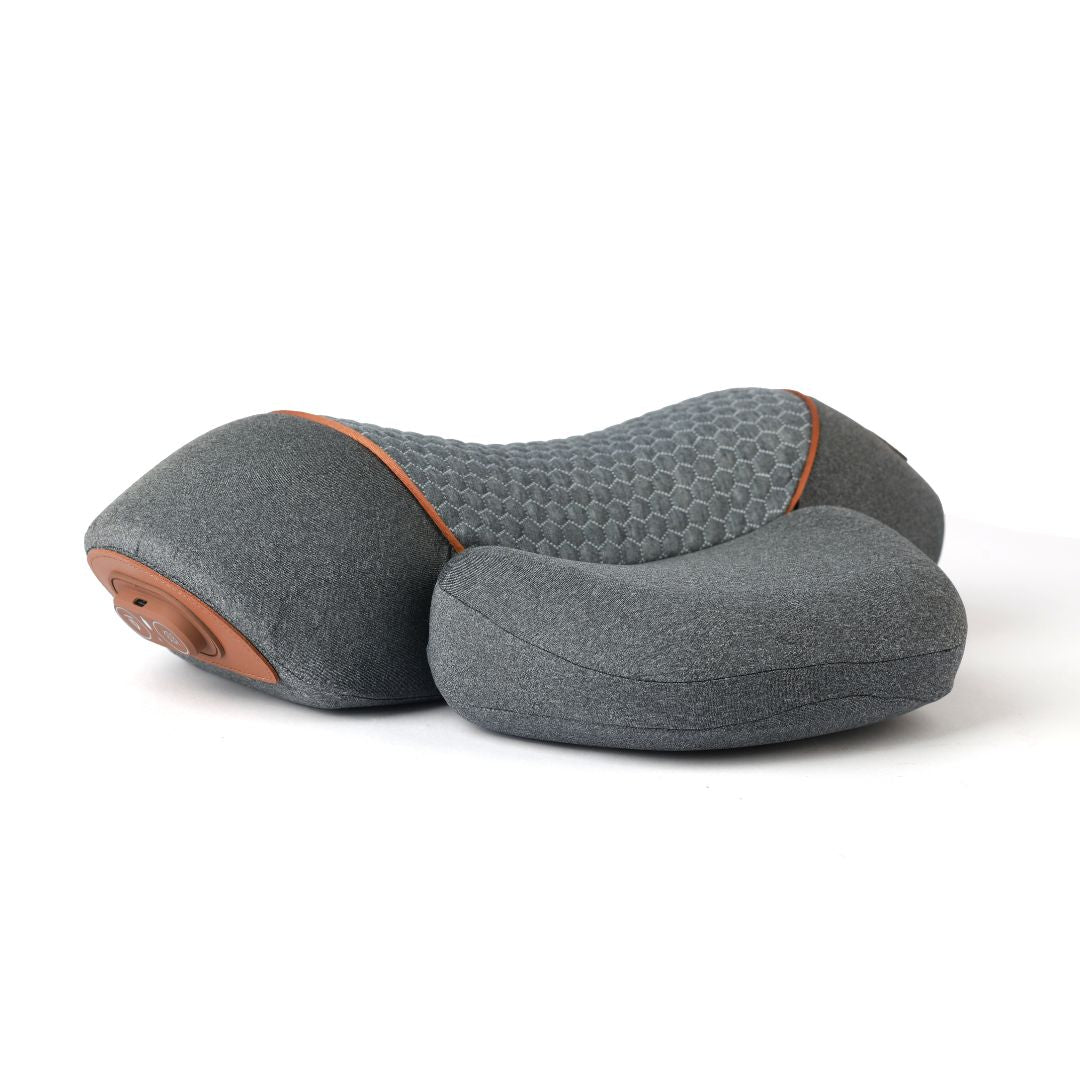
FisioRest is a cervical relief device you lie back on. It is not a vibrating pillow and it is not a heating pad with extra branding. It combines three things that are normally separate — gentle traction, adjustable heat, and targeted vibration — into a single session you can run at home.
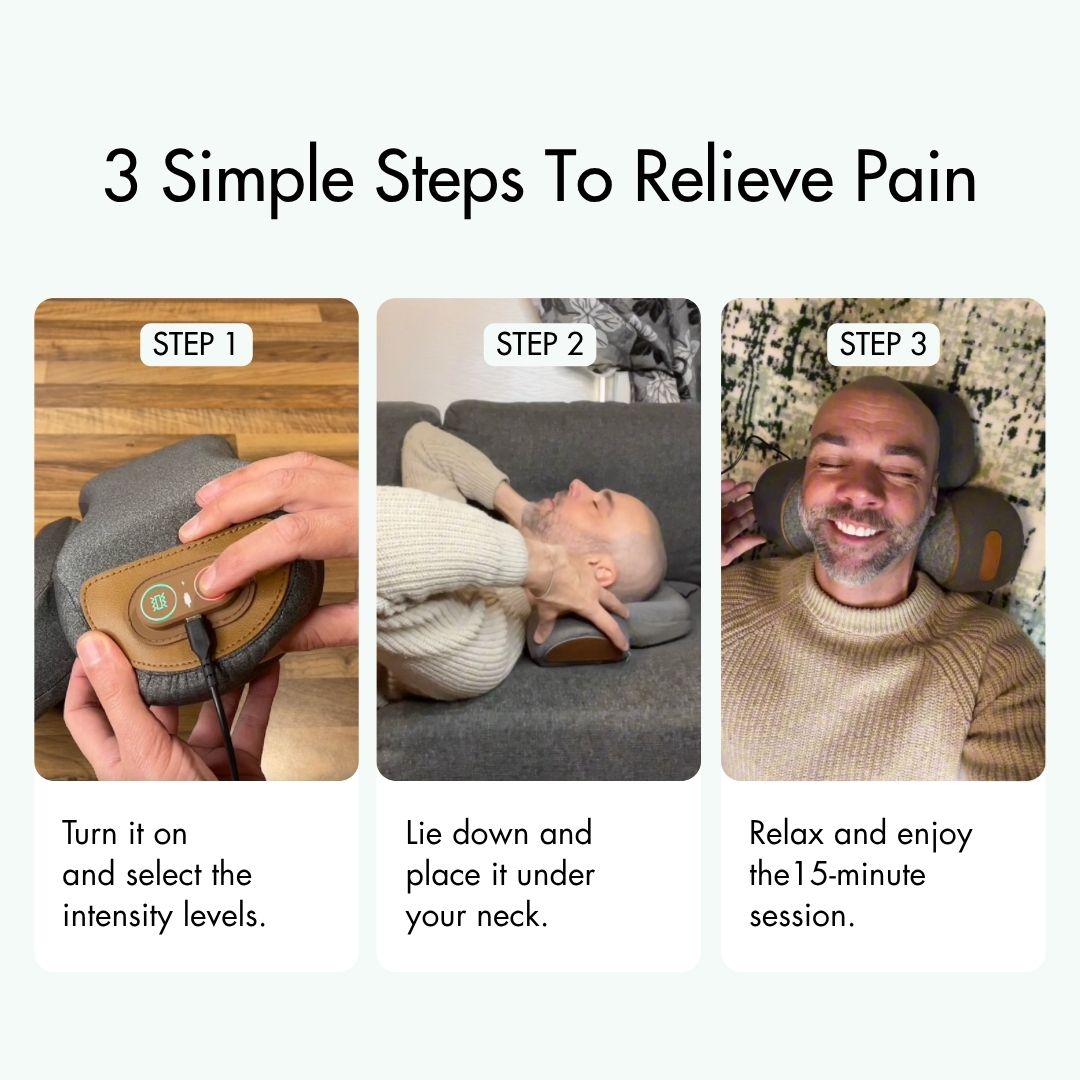
The routine is unglamorous, which is rather the point. You put it on the floor, the bed or the couch, lie back so your neck settles into the contour, choose a heat level and a vibration level, and stay there for about fifteen minutes. The unit switches itself off after thirty.
Opens the official FisioRest store · 365-day returns
How The Three Stages Work Together
The reason the combination matters is sequencing. Each stage makes the next one more effective — the same logic behind warming up before you stretch rather than after.
Heat, to make the muscles willing
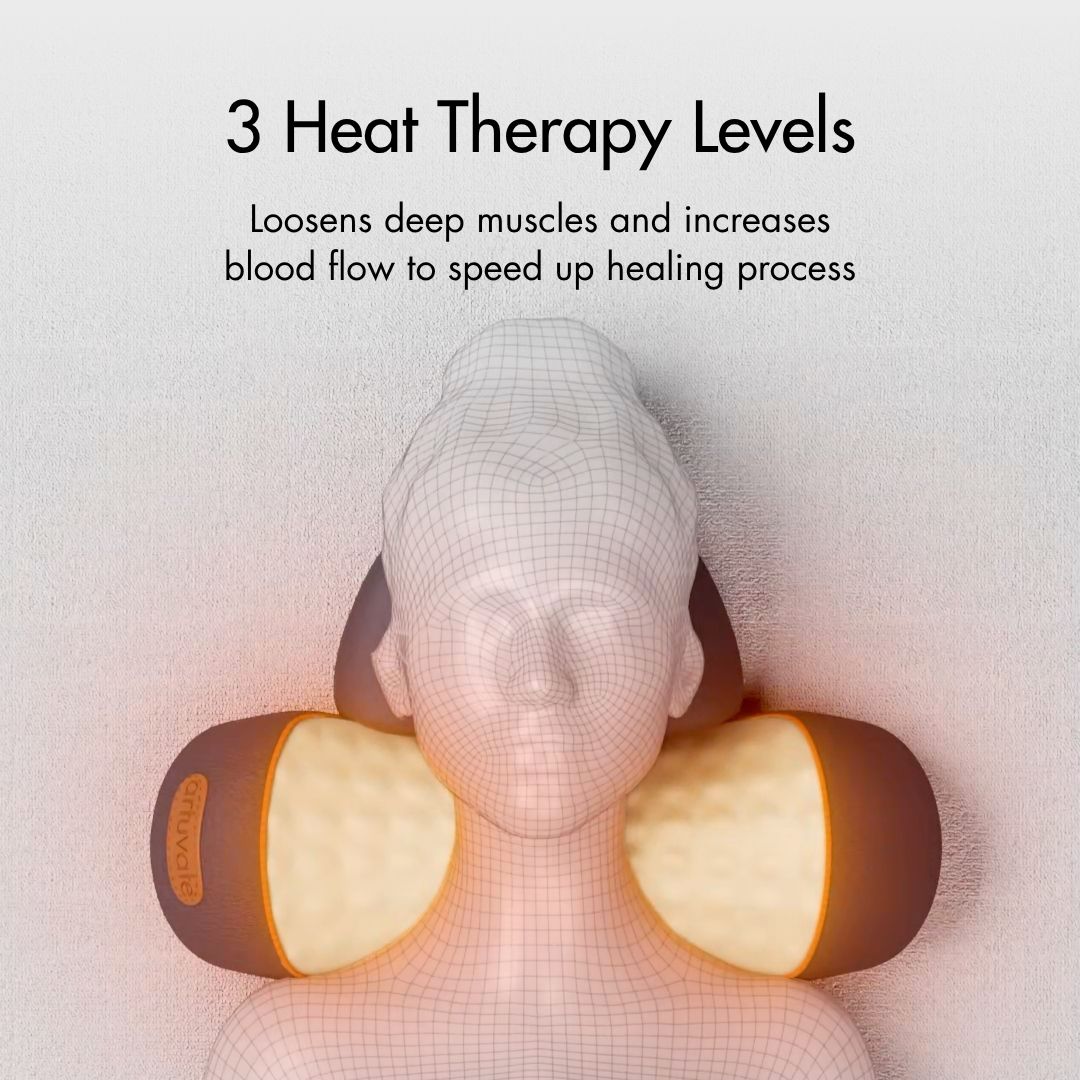
Three settings — roughly 99°F, 113°F and 131°F — warm the deep neck and upper-shoulder muscles rather than just the skin above them. Warm tissue is more pliable tissue, so everything that follows meets less resistance.
Vibration, to work the knots loose
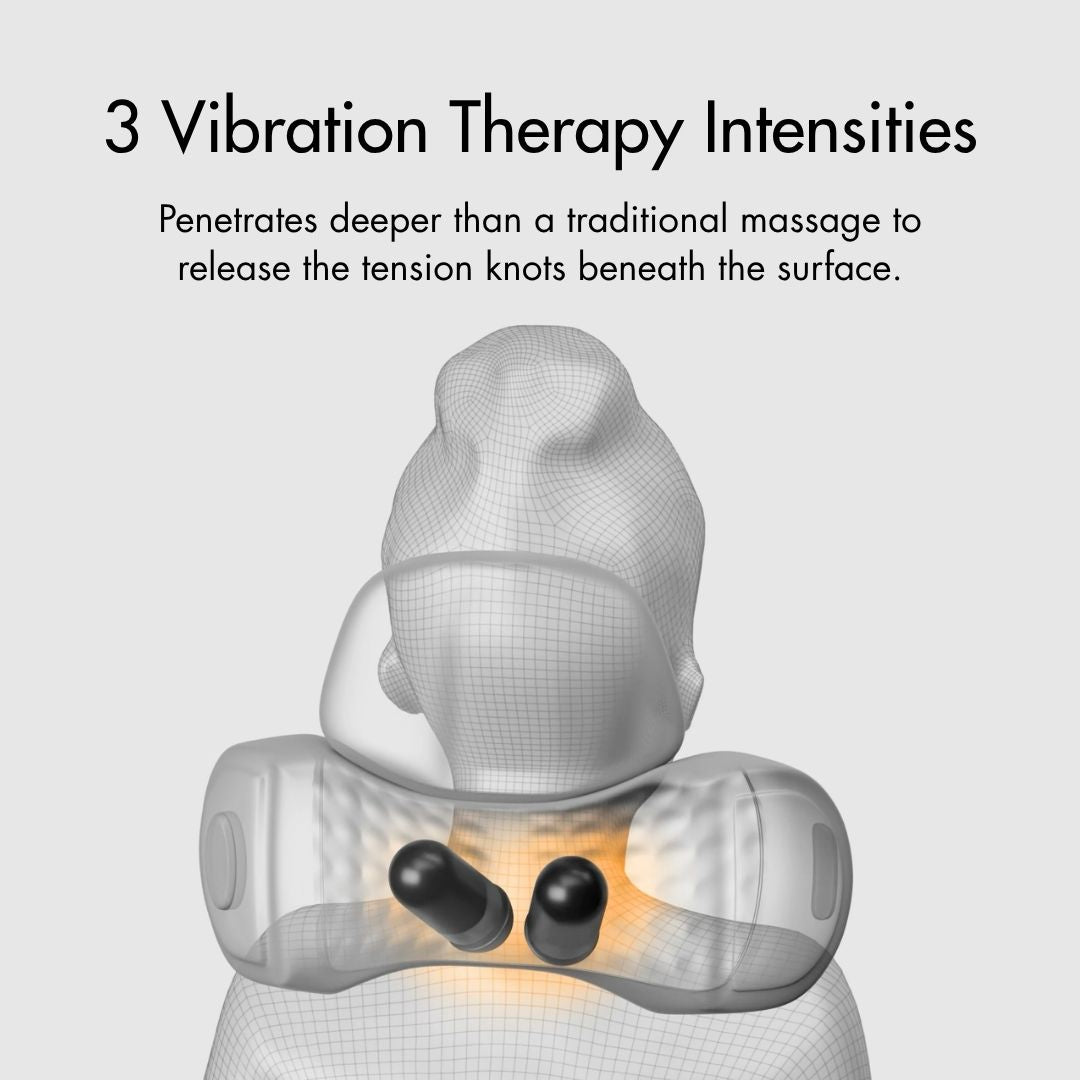
Three vibration intensities target the tight bands that build up along the neck and across the tops of the shoulders. It reaches places that are genuinely awkward to press on yourself, and it keeps working evenly for the whole session.
26° decompression, to make space
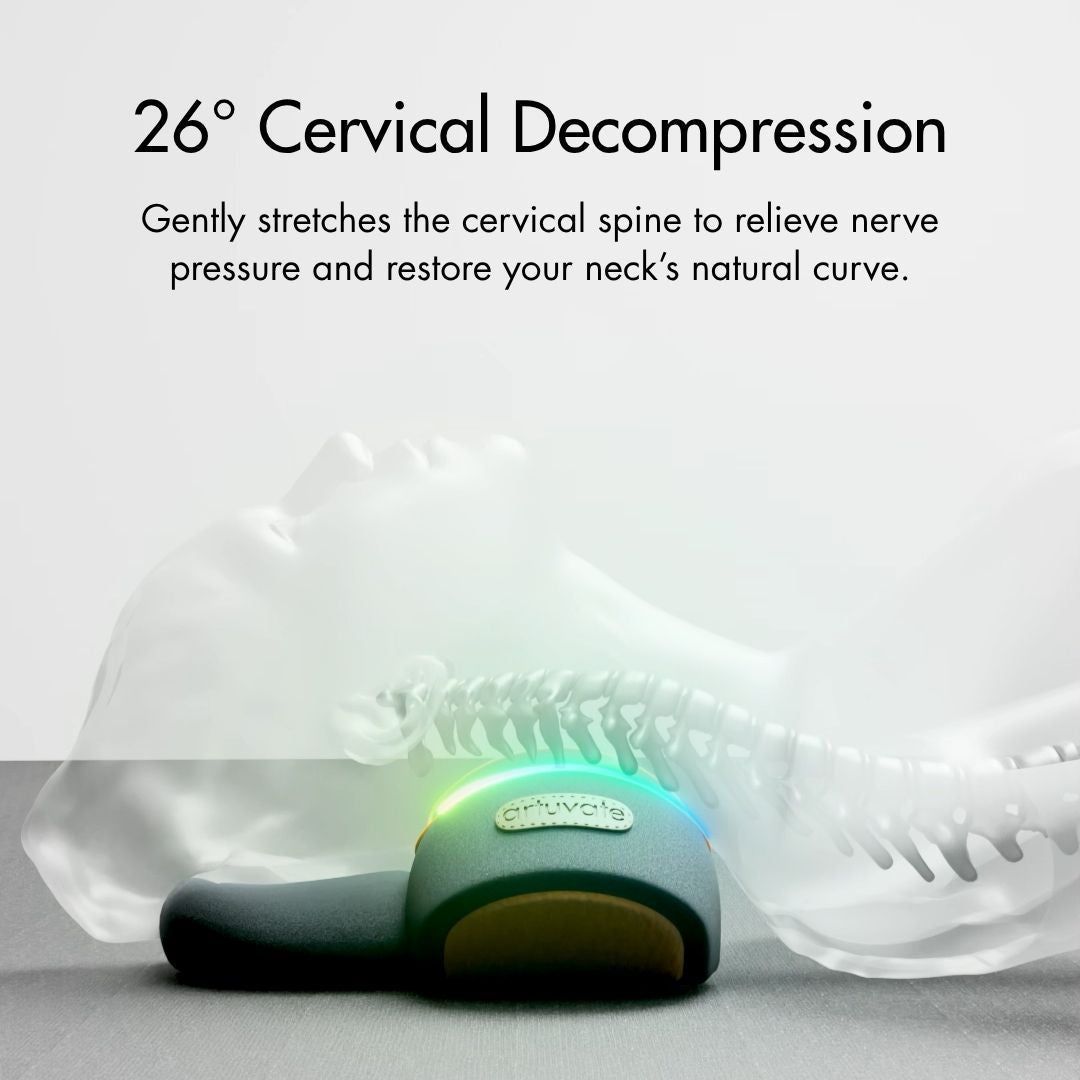
The contour holds your neck at a 26° angle — the traction angle physical therapists use for cervical decompression. There is no motor, no force and nothing that cracks. Your own head weight provides a slow, gentle stretch that encourages the natural curve back.

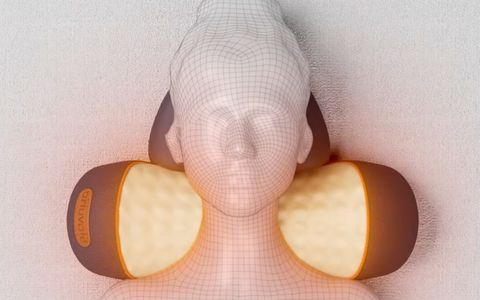
Adjustable heat
Three levels of directed warmth aimed at the deep muscle layer, not just the surface — the layer a folded heat pad tends to miss.
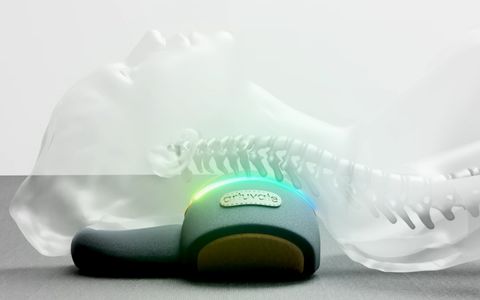
26° decompression
A passive stretch at the angle used in clinical cervical traction, easing pressure between the vertebrae without any mechanical force.
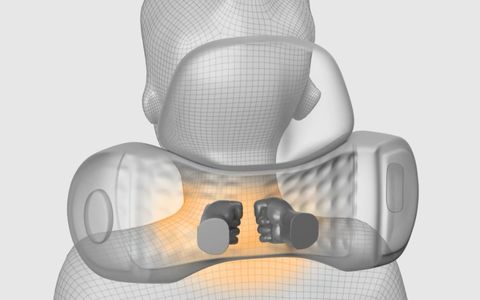
Targeted vibration
Three intensities that reach the tight bands running from the base of the skull across the tops of the shoulders.
Who It Is Aimed At
FisioRest is a comfort and relief device rather than a treatment, and the maker is fairly specific about the situations it is designed for:
- Pressure and tightness at the base of the skull
- Tension headaches that build through the working day
- A stiff neck and a shrinking range of motion
- Forward head posture picked up from screens and phones
- Shoulder tension that makes settling down at night harder
- Long-standing stiffness after an old strain has healed
If you have had recent neck surgery, an acute injury, or a diagnosed condition you are being treated for, this is a conversation to have with your own clinician before you buy anything — including this.
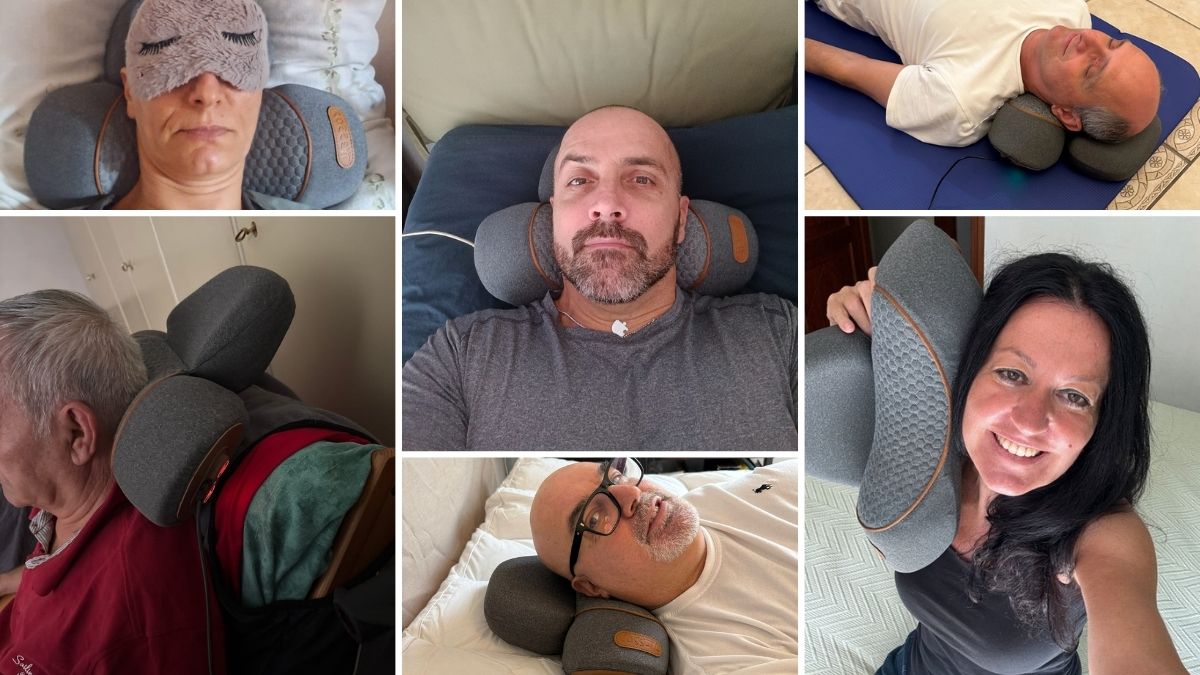
Picture A Morning Where Nothing Announces Itself
No tightening as you turn over. No instinctive reach to knead the same spot on the left side. No pause on the edge of the bed to work out how bad today is going to be.
You sit up. You get on with the morning. Somewhere around ten o’clock you realise you have not thought about your neck once — which, if you have been living with this for years, is a genuinely strange feeling.
That is the outcome people are buying. Not a miracle; just the absence of a background noise they had stopped noticing they were carrying.
So What Does FisioRest Cost?
This is usually where a home device disappoints. One clinical session runs $80 to $150 in most US cities, and a course of them adds up quickly. FisioRest is a single purchase you can use as often as you like.
 Current offer
One-time payment · free shipping · price shown on the official store
- 365-day money-back guarantee
- 2-year manufacturer warranty
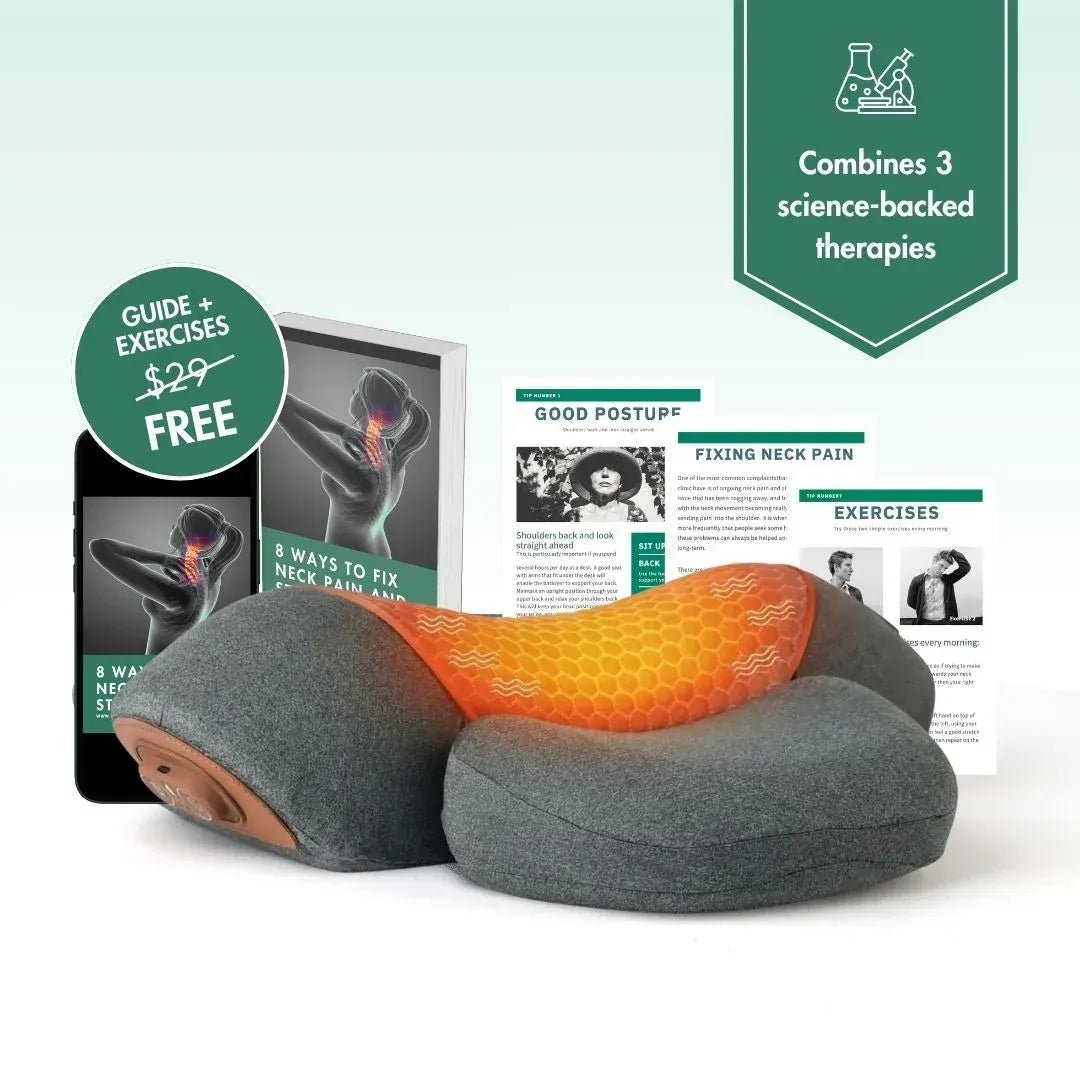
- Carry case, USB-C cable and adapter included
- Printed manual plus a guided exercise programme
Prices and stock are set by the retailer and can change at any time.
A full year to change your mind
FisioRest ships with a 365-day money-back guarantee and a two-year manufacturer warranty. Use it daily for a month. If your neck does not feel looser and your mornings are no easier, contact the retailer for a refund. The point of a year-long window is that you get to judge it over a real winter of desk work, not over a weekend.
How It Compares To The Usual Alternatives
Most of the things people try tackle one piece of the problem. Here is where the differences sit:
| Feature | FisioRest | Heat pad or massager | Pain relief tablets |
|---|---|---|---|
| Eases muscle tension | Yes | Partly | No |
| Creates cervical decompression | Yes | No | No |
| Combines three therapies | Yes | No | No |
| Nothing to take internally | Yes | Yes | No |
| Adjustable to how you feel | 9 settings | Limited | No |
| Cost structure | One-time | One-time | Ongoing |
What Owners Are Saying
Reviews below are shortened and lightly edited for length. Individual experiences vary — a relief device will not work the same way for everyone.

I had written this off as part of getting older
I genuinely thought a stiff neck was just something I would carry from here on, or else something I would be paying a specialist to manage indefinitely. I was sceptical about a device. Two fifteen-minute sessions a day for a few weeks and the stiffness has eased more than anything else I have tried. I use it while the news is on.

76 readers found this review helpful

The afternoon slump was the worst part — that has changed
By about two in the afternoon the pressure across my neck and shoulders used to make concentrating properly a losing battle. I now run a session before work and another after dinner. A couple of weeks in and the afternoons are noticeably easier. I am not going to pretend it is a cure, but for what it cost against what I was spending on appointments, it has earned its place.
53 readers found this review helpful

Bought a second one for my daughter
I had been using mine for a couple of months when I ordered another for my daughter. She is at a desk all day and then on her feet all evening, and her shoulders were always up around her ears. She uses it most nights — more than once she has fallen asleep on it, which is apparently fine because it shuts itself off. Easiest gift I have given in years.
53 readers found this review helpful
FisioRest — 2nd Generation
- Eases neck and shoulder tension in a 15-minute session
- 26° passive decompression, no motors and nothing that cracks
- Warmth and vibration that make winding down easier at night
The Details, In Plain Numbers

In the box
- FisioRest device (2nd generation)
- USB-C charging cable
- USB-C power adapter
- Premium carry case
- User manual
- Neck relief exercise programme
Specifications
- Therapeutic angle: 26°
- Heat: 99°F / 113°F / 131°F
- Vibration: low / medium / high
- Medical-grade memory foam core
- Auto shut-off after 30 minutes
- 15.7 × 10.6 × 3.9 in · 1.65 lb
- 12W / 5V, USB-powered
Shipping & cover
- Processing: 1–3 business days
- Delivery: 3–9 business days
- Free shipping on the current offer
- 2-year manufacturer warranty
- 365-day money-back guarantee
- Sold only through the official store
Questions People Ask Before Ordering
How is this different from the heated massage cushion I already own?
A heat pad warms the surface. A massage cushion works the muscle. Neither one creates space between the vertebrae, which is where a lot of the pressure and the radiating discomfort actually comes from. FisioRest is built around the 26° traction contour first, with heat and vibration layered on top of it — the three together are the point, not any one on its own.
How quickly would I notice anything?
Most people report feeling looser during or straight after the first fifteen-minute session, largely because of the heat and the stretch. Anything more durable builds gradually. The maker suggests giving it daily use for around thirty days before drawing conclusions, particularly if the tension has been accumulating for years. Individual results vary.
I have already tried physical therapy. Why would this be any different?
It is not a replacement for professional care, and it is not claiming to be. The practical difference is frequency. Clinical sessions work while you keep attending them; the cost and the scheduling are what make most people stop. A device sitting beside the couch gets used on a Tuesday evening when a clinic appointment would never have happened.
Can I use it if I have a herniated disc, arthritis or an old whiplash injury?
Many owners with long-standing cervical conditions do use it, but this is not something to decide from an advertorial. Speak to your own doctor or physical therapist first, especially if you have had recent surgery, an acute injury, or any numbness or weakness in an arm. The retailer’s support team will also answer condition-specific questions before you order.
How long and how often should a session be?
Fifteen to thirty minutes, once or twice a day, is the recommended pattern. The device shuts itself off after thirty minutes, so falling asleep on it is not a problem. Many owners move to three or four sessions a week once the initial month is behind them.
Does it need to stay plugged in?
Yes — it runs from a USB power source rather than an internal battery. The maker’s reasoning is that batteries small enough to sit under your neck cannot deliver consistent heat or meaningful vibration for a full session. The cable reaches a bed, couch or armchair comfortably, and any USB power bank rated at 12W or more will run it away from an outlet.
What if it simply does not help me?
There is a 365-day money-back guarantee. If consistent use has not eased your tension or improved how freely you can turn your head, contact the retailer within that year and they will process a refund under their published returns policy.
Can I buy it on Amazon or in a store?
No. FisioRest is sold only through the official store. Similar-looking devices appear on marketplaces, but they are unrelated products — they do not carry the validated 26° contour, the same heat and vibration control, the warranty, or the year-long guarantee. The button on this page goes to the official listing.
What does shipping look like, and how is it packaged?
Orders are processed in one to three business days and typically arrive in three to nine after that. The device ships in its carry case with the USB-C cable, adapter, manual and exercise programme, and free shipping is included in the current offer.
Where That Leaves You
FisioRest will not undo fifteen years of laptop posture in an afternoon, and anyone who tells you otherwise is selling harder than the product deserves. What it does is bundle three well-established approaches — warmth, targeted vibration and gentle cervical traction — into something that takes fifteen minutes and costs less than one appointment.
With a year to return it, the practical downside of trying is mostly the shelf space. If your neck has been running the same weekly cycle for longer than you would like to admit, that is a reasonable trade.
$89.00 · free shipping · 365-day money-back guarantee